
· My definition: the inability to maintain mastery of one’s mental, emotional, and physical wellbeing.
· ChatGPT’s definition: a state of physical, emotional, and mental exhaustion caused by prolonged stress, often at work, marked by fatigue, cynicism, and reduced effectiveness.
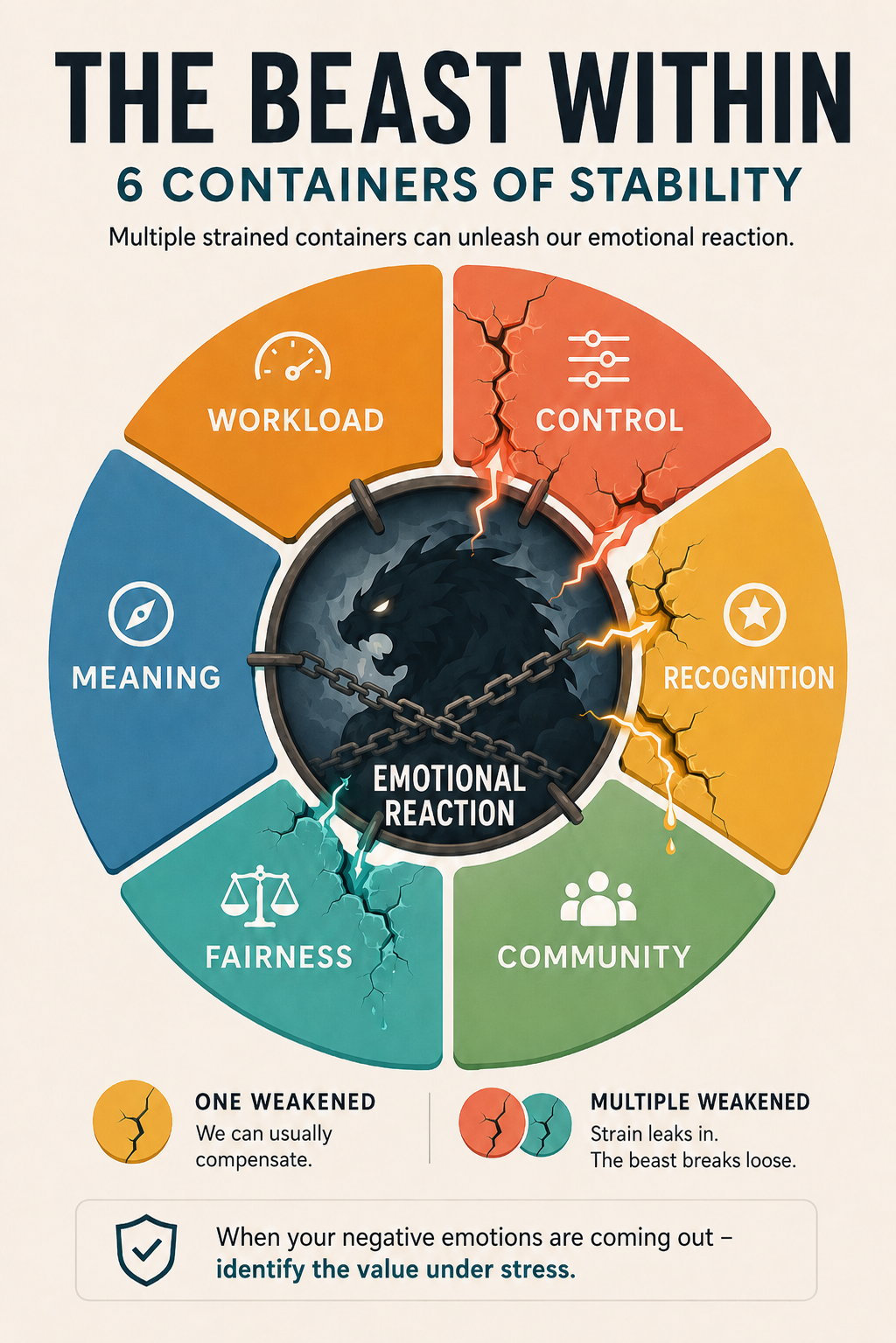
Six Core Drivers of Burnout (Maslach & Leiter’s model):
1. Workload
o Too many demands, not enough capacity.
o Balance: manageable workload, rest, and recovery.
2. Control
o Lack of autonomy or influence.
o Balance: choice, responsibility, and trust.
3. Recognition (Reward)
o Insufficient acknowledgment, appreciation or value – whether financial, social, or intrinsic.
o Balance: fair compensation, meaningful appreciation.
4. Community
o Social disconnection or conflict or inconsistent treatment.
o Balance: collaboration, respect, belonging.
5. Fairness
o Perceived inequity or bias.
o Balance: transparency, consistency, equity.
6. Meaning (Values)
o Misalignment between personal values and organizational goals.
o Balance: connecting work to purpose.
Burnout rarely comes from just one driver—it builds when multiple areas are out of balance, stretching us thin. Imagine a pie chart holding burnout at bay. When one slice shrinks, the others can stretch (like Stretch Armstrong, Mr. Fantastic, or Elastigirl). But when too many shrink at once, burnout seeps through.
Here’s the takeaway: Burnout is an ongoing battle. By reflecting on these six factors, we can see where we’re stretched too thin and take action—both for ourselves and each other.