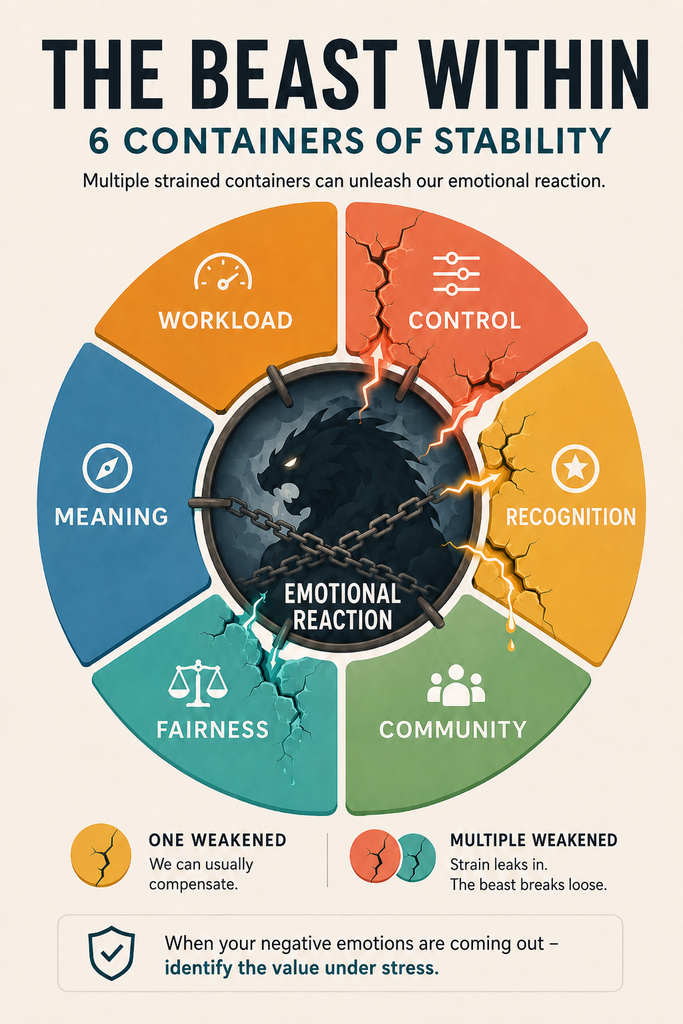
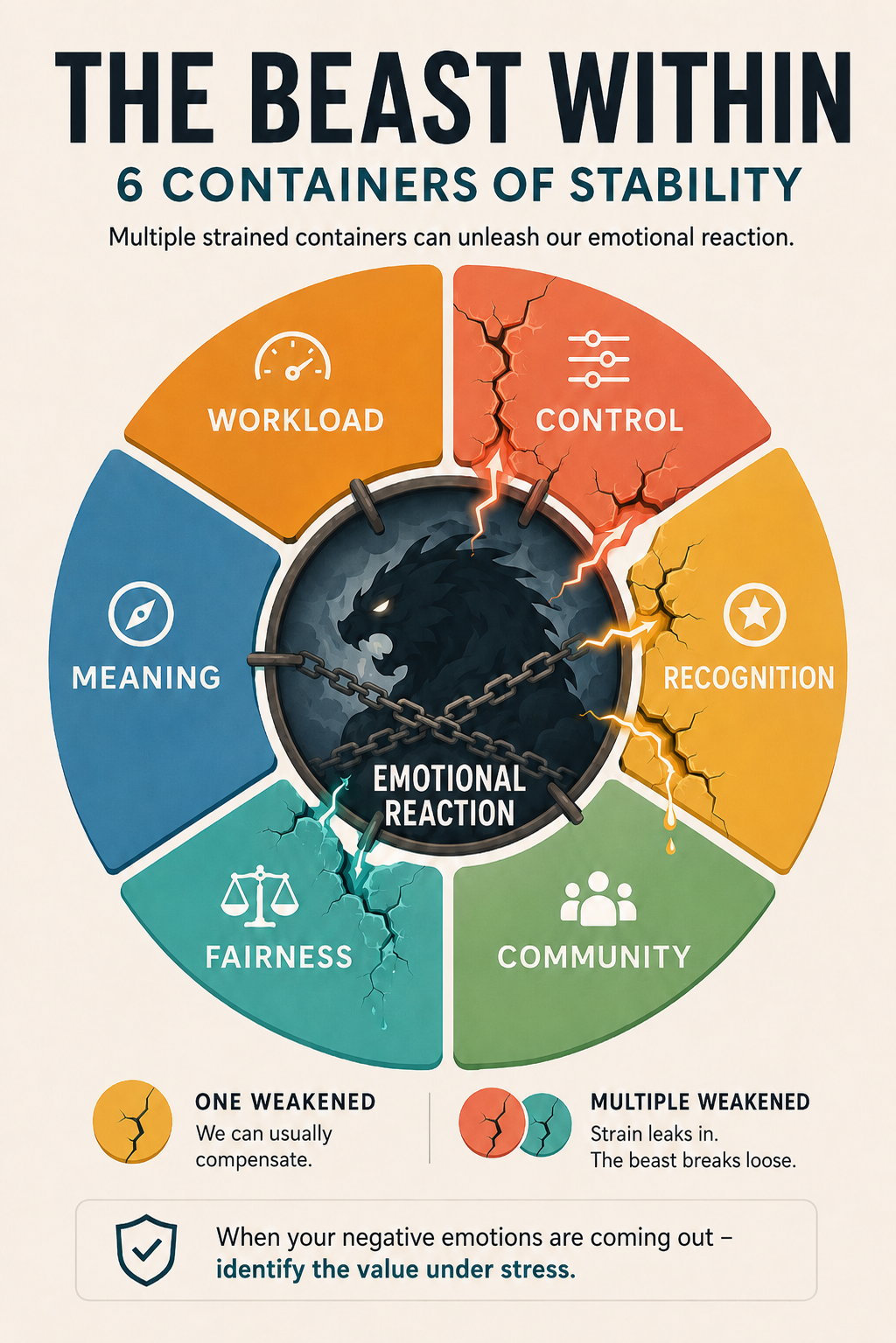
Reacting is what happens when emotion gets ahead of awareness. In emotional intelligence, a reaction is often fast, protective, and automatic. It usually comes from a value under stress: control feels lost, recognition feels absent, community feels broken, fairness feels violated, meaning feels unclear, or workload feels overwhelming. When one area is strained, we can often absorb it. But when several containers weaken at once, the “beast within” starts to break through as anger, defensiveness, withdrawal, blame, or panic.
Responding begins when we pause long enough to ask, “What value is being threatened right now?” Instead of letting the emotion drive the behavior, we use the emotion as information. A response does not deny the feeling; it gives the feeling direction. It allows us to name the stress, choose our words, protect the relationship, and address the real issue underneath. Reacting releases the beast. Responding recognizes why the beast woke up and puts our values back in charge.